

ACADEMIA: THROUGH THE EYES OF A PREACHER BRIDGES FAITH, SCHOLARSHIP, AND
PRACTICAL MINISTRY TRAINING
William James Carter presents a unique collection of theological research papers designed to inspire
pastors, students, and faith based academic growth.
New York, NY, May 17, 2026 — Readers pursuing theological education, sermon preparation, and deeper biblical
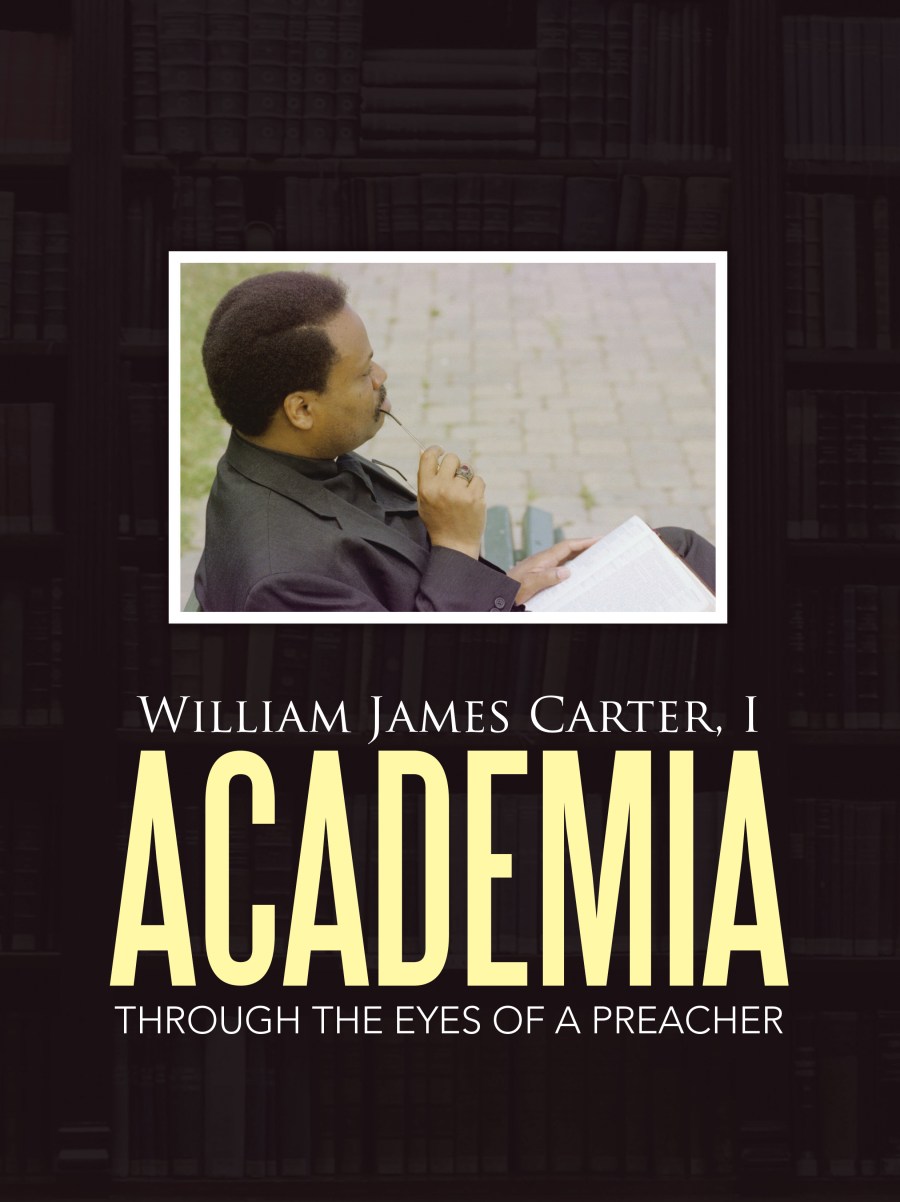
study now have access to a distinctive academic resource through Academia: Through The Eyes Of A Preacher by
William James Carter I. Combining theological scholarship with practical ministry insight, the book offers a rare and
transparent look into the academic journey of a minister committed to both education and discipleship.
The book features a collection of research papers completed by Elder William James Carter during his studies at
Liberty Baptist Theological Seminary. Presented intentionally in their original, largely unedited form, the essays
provide readers with an authentic educational experience that highlights both academic growth and practical
learning. Rather than presenting polished perfection, Carter allows readers to observe the developmental process
behind theological writing and research.
This approach gives the book a unique educational value, particularly for students and aspiring writers seeking to
improve their own academic and ministerial communication skills. By preserving minor writing mistakes while
maintaining the depth of the theological content, Academia: Through The Eyes Of A Preacher encourages readers to
focus not only on technical excellence but also on the substance and purpose behind scholarly work.
Bobbie Tea
The research papers explore a range of religious themes and include numerous references intended to guide further
academic study and sermon preparation. The book serves as a practical tool for pastors, ministry leaders, theology
students, and lay members seeking reliable material for personal growth, teaching, and spiritual development. Its
combination of theological reflection and accessible academic discussion creates a resource that bridges classroom
learning with real world ministry application.
Inspired by a commitment to discipleship and biblical education, Carter’s work reflects his belief that knowledge
should remain accessible and useful to those seeking to grow spiritually and intellectually. The book emphasizes the
importance of continuous learning while encouraging readers not to fear imperfection in the educational process.
Through this honest presentation of his academic work, Carter offers encouragement to students navigating their own
journeys through higher education and ministry training.
Franklin Stalwart
William James Carter I is widely recognized as a minister, mentor, and writer dedicated to demonstrating Christian
values through both leadership and personal example. An alumnus of respected academic institutions, Carter has
devoted his life to ministry, mentorship, and family. His commitment to discipleship extends beyond the pulpit, as he
places strong emphasis on leading and nurturing his own family while helping others grow in faith and understanding.
The book is now available — secure your copy here:
https://a.co/d/0e5Vq6Yd
For review copies, interview requests, or additional information, please contact:
William James Carter I
Email: preachercarter@preachercarter.com
Tag: academia
Academic Contest
Now that I have received some of my books the contest is on. Remember if you are close family or a business associate you are disqualified from this contest. Now, in order to win a copy of my book you must like and share my Facebook page “The Christian Perspective.” You must also be the first to correctly answer this two part question. Genesis 49: 10 makes mention of a sceptre. The question is what is the significance of the sceptre and what is the text alluding to? The winner will be announced as soon as I note the correct answer as we all delve in to just a bit of Academia.
Peering into Academia
Academia: Through the Eyes of a Preacher
Now, it is true that most of my writings are not designed to be academic in nature. However, that does not mean that I have veered from what has caused me to grow and understand more concerning the things of God. In my recent book Academia: Through the Eyes of a Preacher I examine a number of academic disciplines associated with Christianity. Those disciplines range from history to evangelism; from discipleship to missions and everything in between.
With that, please peer into the book and see what you can glean. The below is an additional portion of the essay “The Nicene Creed: The Trouble that Caused It.” Please remember this work is copyright protected and and all rights remain reserved. Now, let’s peer into academia again.
Despite the company Athanasius found himself in there was also grave opposition to his stand against heretical teachings. Saint Hilary of Poitiers was born in 315 with an uncertain Christian heritage.[1] Even though Hilary was appointed Bishop of Poitiers and eventually made a saint questions concerning his Christianity are brought to question in that he was seen as a pagan.[2] No matter the issue of Hilary’s Christianity his writings clearly show that he did not recognize Jesus as being coeternal with the Father rather clearly states that Jesus is a creation of God. In this vein Hilary states “He is not eternal or co-eternal, nor was He uncreated at the same time with the Father…”[3]
The calling of the synod included more than discussions on the substance of Jesus. Little is said in respect to the Holy Spirit even in the Nicene Creed but there was argument against His divinity which was part of the controversy at large. The problem was even though the Holy Spirit was associated with the Godhead there was considerable uncertainty as to His nature. The matter of His nature brought to the center of the argument supposed that He was a mere person and the Arians saw Him as being subordinate to the Son who was counted as being subordinate to the Father.[4] The confusion was so great that Basil expressed “Of the wise men among ourselves, some have conceived of him [the Holy Spirit] as an activity, some as a creature, some as God…”[5] With this lack of understanding as to who the Holy Spirit was it obviously brings into question not only His substance but also His divinity and authority.
This instability in respect to the Holy Spirit becomes more compelling when His divinity is purposely stripped away. Some Homoiousians (those subscribing like or same substance to Jesus) refused to afford the Holy Spirit His rightful place in the Godhead.[6] This denial of the divinity of the Holy Spirit was part of the heretical teachings of Arianism.[7] The Deity of the Holy Spirit was also denied by Macedonius who declared that the Holy Spirit was nothing more than a “minister and a servant”.[8]
Now, to put this segment into context you will have to read the entire essay. Not to worry, there are other studies that will catch the attention of all scholars. For instance, “The World of Islam,” “Diverse Gifts,” and “Looking at the Evidence” are three of the essays included in this work. You will also find an exhaustive bibliography to aid in research. So, go ahead, get you a copy and put on your seat belts. There will be surprising academic twist and turns as you learn academia through the eyes of a preacher.
[1] The Catholic University of Puerto Rico, The Fathers of the Church: A New Translation (Washington, D.C.: The Catholic University of America Press, 1954)V
[2] Ibid.
[3] Ibid., 102
[4] Richard E. Rubenstein, When Jesus Became God: The Epic Fight Over Christ’s Divinity in the Last Days of Rome (New York: Harcourt Brace & Company, 1999), 205
[5] Ibid., pg 206
[6] Everett Ferguson, Church History: From Christ to Pre-Reformation (Grand Rapids: Zondervan, 2005), 207
[7] Ioannis Karmiris, “The Second Ecumenical Council” in The Ecumenical Review 33 (July 1981):244-248
[8] Earle, E. Cairns, Christianity Through the Centuries: A History of the Christian Church (Grand Rapids: Zondervan, 1954), 129
Beans Done Spilled
OK, I have to tell the truth. I have been very busy these past several months. One of the things I have been working on is my book. Yes, I am about to release my second book and it is quite different than my first book Down the Via Dolorosa. This book I have been working on is now in the design phase with Westbow Press and is one sure to bring attention to Christianity at large. I have spilled the beans about this work to some and now it is time to bring it to the attention of everyone. Yes, I done spilled the beans about my next book (grammatical error intentional).
Oh, I did not tell you the name of the work. Well, it is called Academia: Through the Eyes of a Preacher. This book contains a number of my seminary essays as I worked my way through Master of Religion and Master of Divinity programs at Liberty University. Many hours of research and untold hours of other writing and studying went into this work. It contains multiple references with over four hundred footnotes. It is an academic work that will prove to be an excellent tool for any clergyman or layman that wants to sharpen his theological sword.
However, this book is quite unique. When preparing the essays I made some minor mistakes. The papers were submitted for grading with those mistakes remaining in the essays. I have intentionally kept those mistakes in this work because I want seminarians to carefully scrutinize the essays in an effort to better themselves. Now, the errors are not grave errors yet they are errors. Experts will be able to quickly point to them. So, seminarians go ahead and use my work as a source of inspiration as well as learning. Clergy members, there are untold lessons and sermons in the text of this work. So, go ahead and see where you can be stretched.
The following is a taste of one such essay. Please remember, as always this is copyrighted work with the ISBN number 9781512718300. All rights are reserved for this document as well as Academia. Please look at this excerpt from “The Nicene Creed: The Trouble that Caused It.”
Another adherent to Christ being less than Devine was Paul of Samosata. This heretical bishop espoused the notion that Christ was a created being thereby making Him purely Man and if Christ was merely man He would have no equality with the Father.[1] While this belief may not be counted as Arianism in the strictest since it certainly has the overtones of pulling Christ from the same substance as the Father. Additionally Paul’s Christological views were along the lines of Monarchianism which led to the idea of the Trinity being a Trinity of names only.[2] Subsequently Paul’s teachings were the impetus of the doctrine of Adoptionism.
This brief background provides a picture of why the church was at the point of turmoil. The very essence of God was being attacked in the Person of the Word and by extension the Holy Spirit. This heretical treatment of the Godhead was not taken lightly by some of the leading clergymen of the day. Among the dissenters of Arianism was Athanasius (c. 298-373). He was ordained as a deacon by Alexander during the time of disputations with Arius.[3] Athanasius traveled with Bishop Alexander to the Council of Nicaea where the heretical teachings of Arius were denounced.[4]
Despite the company Athanasius found himself in there was also grave opposition to his stand against heretical teachings. Saint Hilary of Poitiers was born in 315 with an uncertain Christian heritage.[5] Even though Hilary was appointed Bishop of Poitiers and eventually made a saint questions concerning his Christianity are brought to question in that he was seen as a pagan.[6] No matter the issue of Hilary’s Christianity his writings clearly show that he did not recognize Jesus as being coeternal with the Father rather clearly states that Jesus is a creation of God. In this vein Hilary states “He is not eternal or co-eternal, nor was He uncreated at the same time with the Father…”[7]
This work should be ready around Thanksgiving and will make wonderful gifts for those that enjoy good exegesis. Yes, that was a shameless plug. What can I say? I am trying to get the word out! So, sit back and enjoy the academic ride.
[1] New Catholic Encyclopedia, vol. 11, 34
[2] Ibid.
[3] Encyclopedia of Religion
[4] Ibid.
[5] The Catholic University of Puerto Rico, The Fathers of the Church: A New Translation (Washington, D.C.: The Catholic University of America Press, 1954)V
[6] Ibid.
[7] Ibid., 102
In Case You Did Not Know
It’s true and I know I don’t mention it much but other than being an author and blogger I am also a public speaker. Yes, I have been know to get behind the mike espousing truths to all that will hear.
Now, while I often speak at church services in forums that include revivals, anniversaries and the like I answer to just good old-fashioned preaching and teaching. I also provide lectures, workshops and many other speaking venues. But my services are not for churches alone. If your company needs a speaker on such issues as diversity and ethics I will do my all to answer the call.
And if you want to know more about me I will be brief but you can learn more about me on my website. Even so I was saved at the age of seventeen, worked in the church in nearly every position to my present associate pastor. Further academia has found its way on my resume. I hold an A.A. in Business, a B.S. in Religion, M.A.R. in Biblical Studies and an M.Div in Pastoral Ministries. It is my hope one to to acquire that elusive doctorate.
Now, you know how to contact me and you know that all my work is premised upon the Word of God so I am on the standby to aid you in that I can.

